

Principal Investigator:
Juan R. Cubillos-Ruiz, William J. Ledger, M.D., Distinguished Professor for Infection and Immunology in Obstetrics and Gynecology & Professor of Microbiology and Immunology in Obstetrics and Gynecology
Background & Unmet Need
- Immunotherapy, particularly T cell-based strategies, represents a promising approach against solid tumors
- However, the efficacy of such treatments remains limited due to the immunosuppressive nature of the tumor microenvironment (TME), which impairs T cell function
- The efficient import, trafficking, and catabolism of extracellular fatty acids is crucial for T cell mitochondrial respiration and overall cytotoxic capacity, particularly under stress conditions induced by the TME
- Mechanisms governing this crucial immunometabolism axis remain unexplored, especially its anti-cancer functions
- Unmet Need: Improved molecular strategies to overcome immunotherapy suppression by the TME
Technology Overview
- The Technology: A method for restoring transgelin 2 (TAGLN2) expression to promote the anti-tumor effects of T cells in an immunosuppressive environment
- The Discovery: The cytoskeletal organizer TAGLN2 is necessary for optimal T cell fatty acid uptake and mitochondrial respiration in nutrient-restricted environments
- TAGLN2 interacts with cytoplasmic FABP5, an importer of extracellular fatty acids, enabling its optimal surface localization and function
- PoC Data: T cells present in solid tumors and ascites of HGSOC patients demonstrate low TAGLN2 expression that was associated with their dysfunction/exhaustion (p<0.0001)
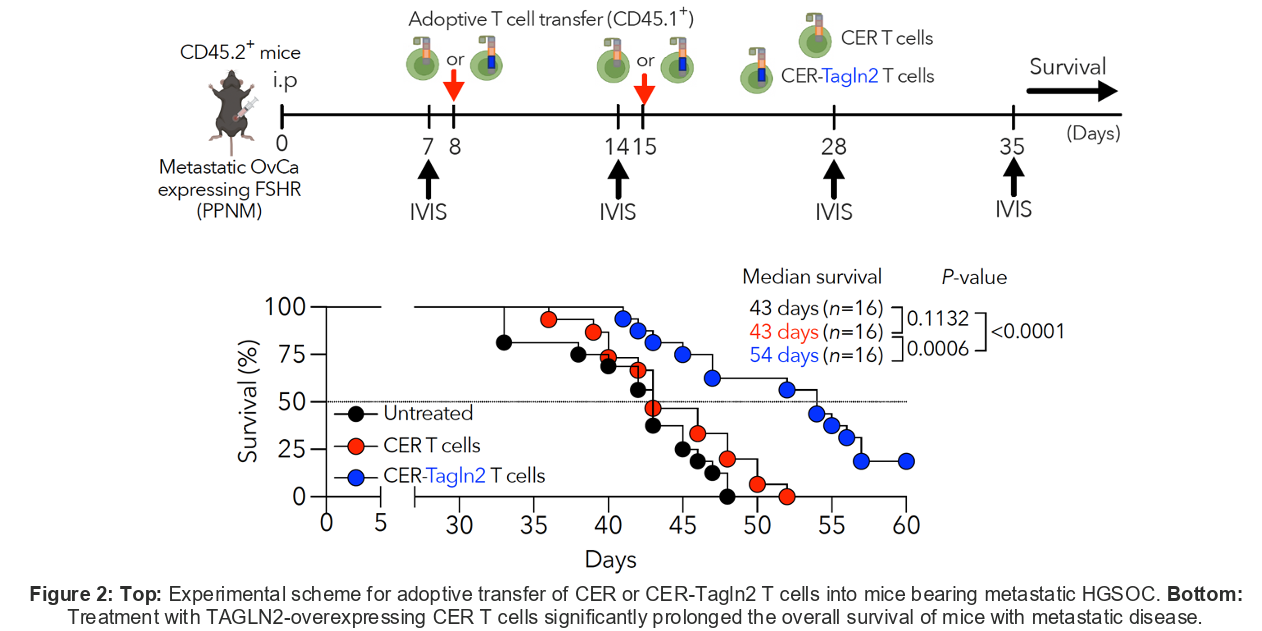
- Adoptive immunotherapy using TAGLN2-overpressing chimeric endocrine receptors (CER) T cells demonstrated improved capacity to control metastatic HGSOC progression
Technology Applications
- Adoptive cell transfer therapies, such as CAR-T cells, against solid tumors
- Combination therapy with other immunotherapeutic agents for solid tumors
- Therapeutic target for the identification of drugs that upregulate or stabilize TAGLN2 expression
- Strategy to increase the metabolic fitness and local anti-tumor activity of T cell therapies
Technology Advantages
- Improved therapeutic efficacy in immunosuppressive tumors such as ovarian cancer
- Overcomes tumor microenvironment-induced ER stress responses that typically inhibit T cell function
- Easily integrated into existing CAR T vectors through simple modification of the expression cassette
Publications

Intellectual Property
Patents
- US Application Filed
Cornell Reference
- 10981
Contact Information

For additional information please contact
Brian Kelly
Director, Business Development and Licensing
Phone: (646) 825-2766
Email: bjk44@cornell.edu