

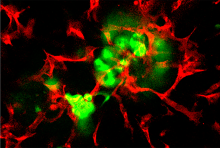
Mapping of Specialized Blood Vessel Cells May Lead to Diabetes Treatments
February 6, 2025
The distinct population of endothelial cells that line blood vessels in the insulin-producing “islets” of the human pancreas have been notoriously difficult to study, but Weill Cornell Medicine investigators have now succeeded in comprehensively detailing the unique characteristics of these cells. The resulting atlas advances basic research on the biology of the pancreas and could lead to new treatment strategies for diabetes and other pancreatic diseases.

Innovators Encourage Scientists and Physicians to Dive into Technology Commercialization
January 9, 2025
In its eighth year, the annual Dean's Symposium on Innovation and Entrepreneurship celebrates innovation and Weill Cornell Medicine’s entrepreneurial spirit, while encouraging and motivating the next generation of innovators, inventors and entrepreneurs.
Multi-Disciplinary Program Hones Biomedical Commercialization Skills for Early-Career Scientists, Clinicians and Business Students
December 17, 2024
Accelerating BioVenture Innovation (ABI) program Dec. 5 graduated another cohort with its signature pitch finale in Uris Auditorium and a networking reception. The ABI course is one of the anchor programs developed by BioVenture eLab to create a culture and environment of entrepreneurial thinking, as well as resources and industry professionals to spin out companies from Weill Cornell Medicine.
Licensing of PDX Model Repository Can Benefit Cancer Research Community
December 2, 2024
In October, Weill Cornell Medicine and Champions Oncology signed a licensing agreement allowing Champions Oncology to distribute and commercialize its extensive bank of hematological PDX models, generated by Dr. Giorgio Inghirami, a professor of pathology and laboratory medicine at Weill Cornell Medicine and a member of the Englander Institute for Precision Medicine and Sandra and Edward Meyer Cancer Center. Under the licensing agreement, Champions Oncology has secured the rights to distribute these models to academic institutions and other laboratories on a worldwide basis.
Entrepreneurship Conference Brings Together Innovators from All Cornell Campuses and Inspires Students
November 29, 2024
Eclectic Convergence conference brought more than 400 people to Cornell Tech in New York City on Nov 15. Attendees at the event included alumni, staff, faculty and students from the Ithaca, Cornell Tech and Weill Cornell campuses, as well as entrepreneurs and faculty and students from many other institutions, including 20 students and five faculty members from Tsinghua University in Beijing, China.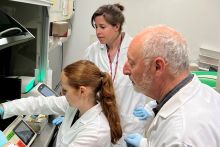
In-House Gene Therapy Core Facility Helps Move Novel Products from the Bench to the Clinic
November 19, 2024
With the 25th anniversary of the Belfer Gene Therapy Core Facility approaching next year, Dr. Stephen Kaminsky, professor of research in genetic medicine and associate director of the facility, shared with us the history and successes of this cutting-edge research facility. It has played a vital role in supporting Cornell University, the National Institutes of Health (NIH) and other U.S. and international investigators in constructing, producing and testing clinical gene therapy vectors.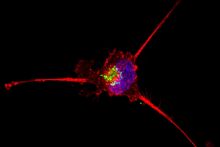
New Genetic Signatures Can Classify Breast Cancers and Guide Prognosis
October 4, 2024
Researchers at Weill Cornell Medicine have developed breast cancer cell-of-origin signatures that can better predict both overall and progression-free survival of patients with breast cancer compared to previously developed genomic signatures.
The Englander Institute for Precision Medicine Receives Gift from Investment Firm to Support Its Innovative Cancer Therapeutic Research
October 4, 2024
The Medical Excellence Foundation (MEF) pledged to Weill Cornell Medicine a two-year, $200,000 philanthropic gift to support the work of Dr. Olivier Elemento, director of the Englander Institute for Precision Medicine (EIPM) and a professor of physiology and biophysics.
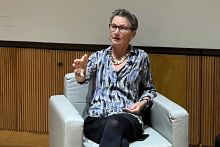
From Scientist to Entrepreneur: Dr. Annie De Groot Shared Her Personal Journey of Helping Discover Immune Boosting Drugs
September 17, 2024
From watching her father perform experiments in the laboratory to working alongside prominent researchers at the National Institutes of Health (NIH), Dr. Annie De Groot’s definition of ‘a physician scientist’ evolved to include entrepreneur. While building her career, she discovered a passion for translational immunology research and founded EpiVax, an immunoinformatics platform company that helps develop findings in the lab into therapeutics for clinical trials.

Dr. Paraskevi Giannakakou Named 2024 XSeed Award Winner
September 11, 2024
Dr. Paraskevi Giannakakou, professor of pharmacology in medicine, was one of the winners of the fourth annual XSeed Award, Cure announced in ceremonies in New York City on Sep. 10. The XSeed Award supports women- and minority-led life science startups in New York City by providing critical funding to bridge the gap from promising preclinical drug development research to the marketplace and commercial success.